 Notesage
Read it later. Or listen.
Send an article to Notesage and it becomes a file in your own folder — one you can read on the train, hear on a walk, and still open in ten years.
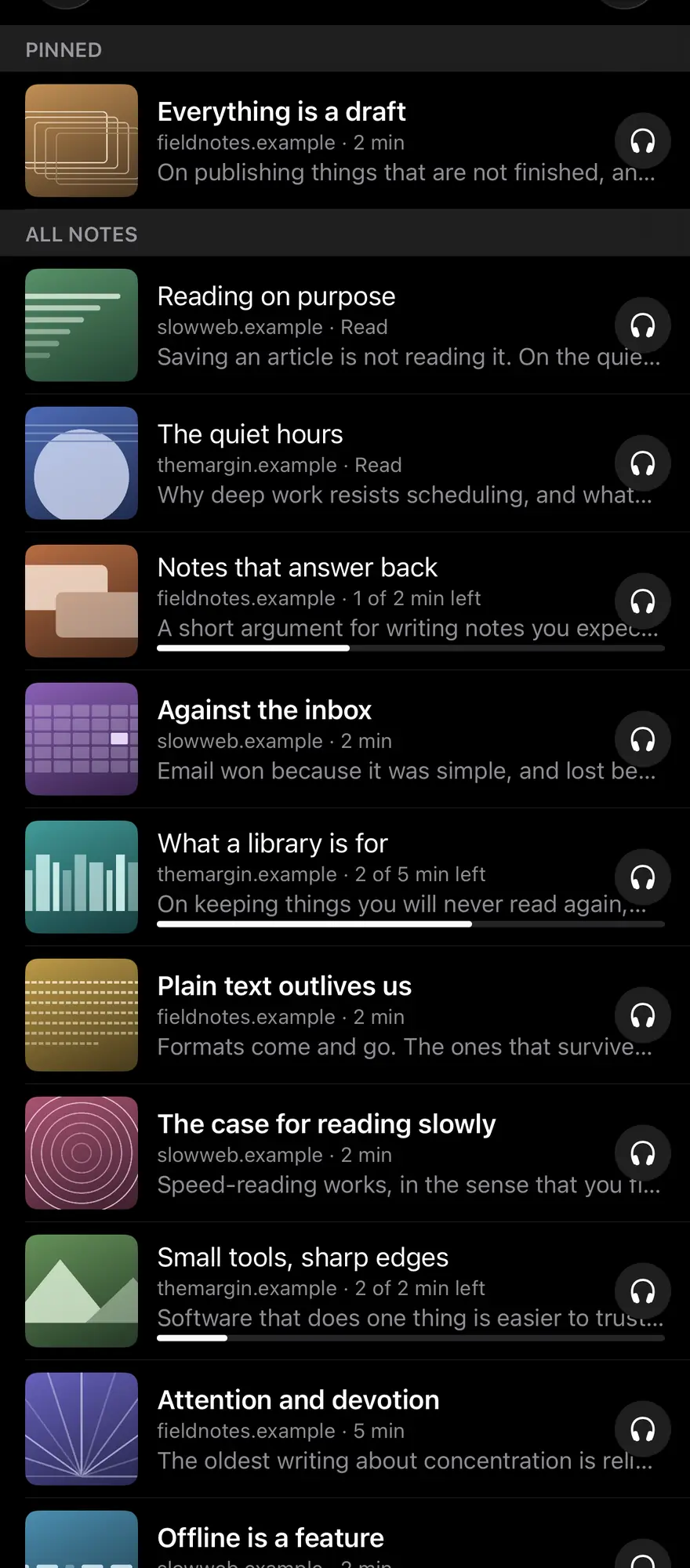
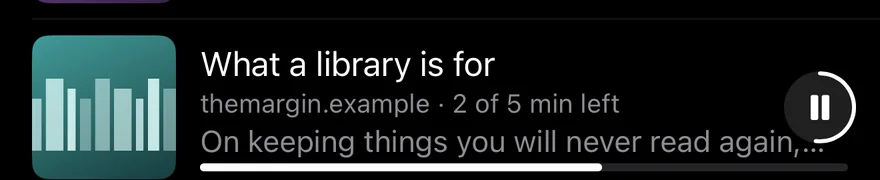

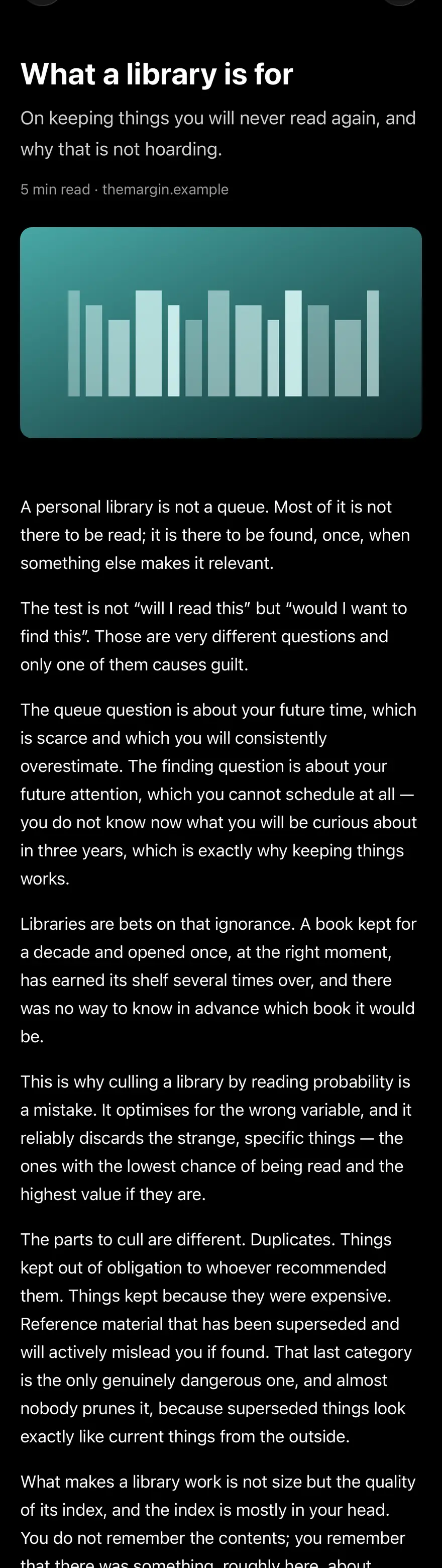


It remembers where you stopped
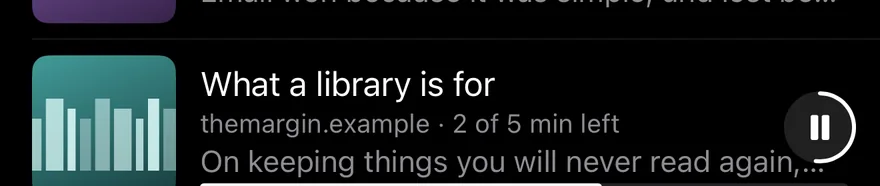
Every saved article shows how far you got and roughly how long is left. Come back a week later and the list tells you, instead of asking.
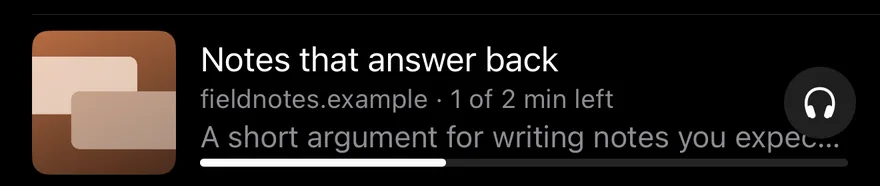
Or hear it instead
Tap the headphones on any row. Articles and notes both, read aloud from where you left off — and your place is the same whether you read it or heard it.
Your pile, your order
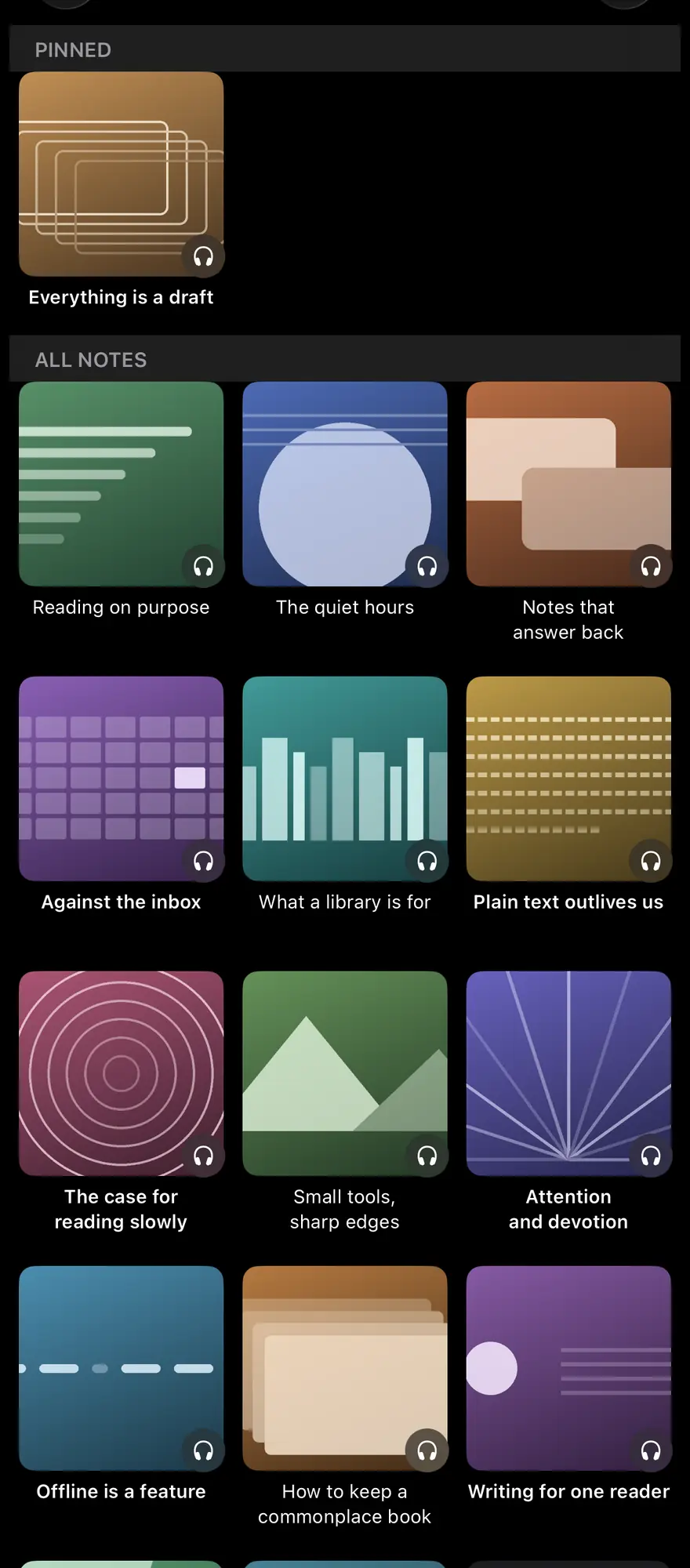
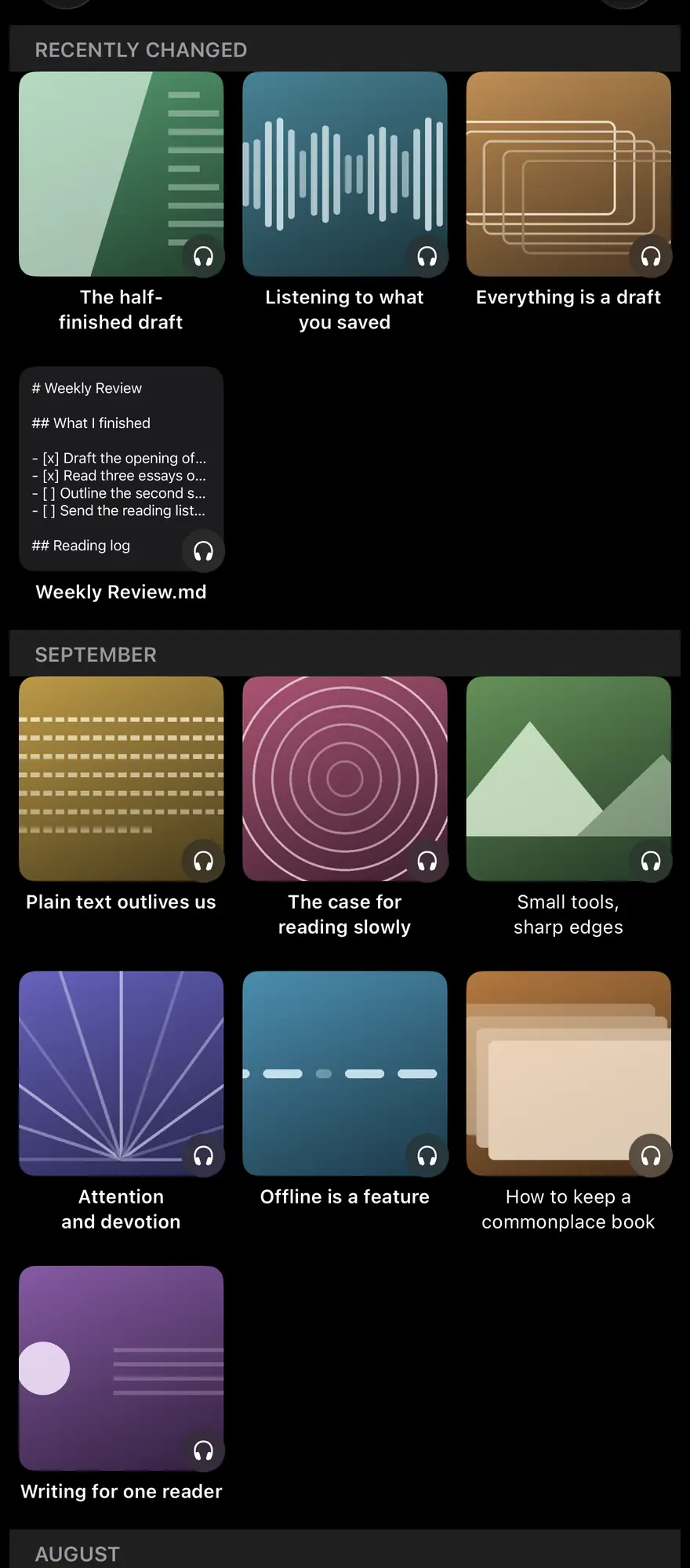
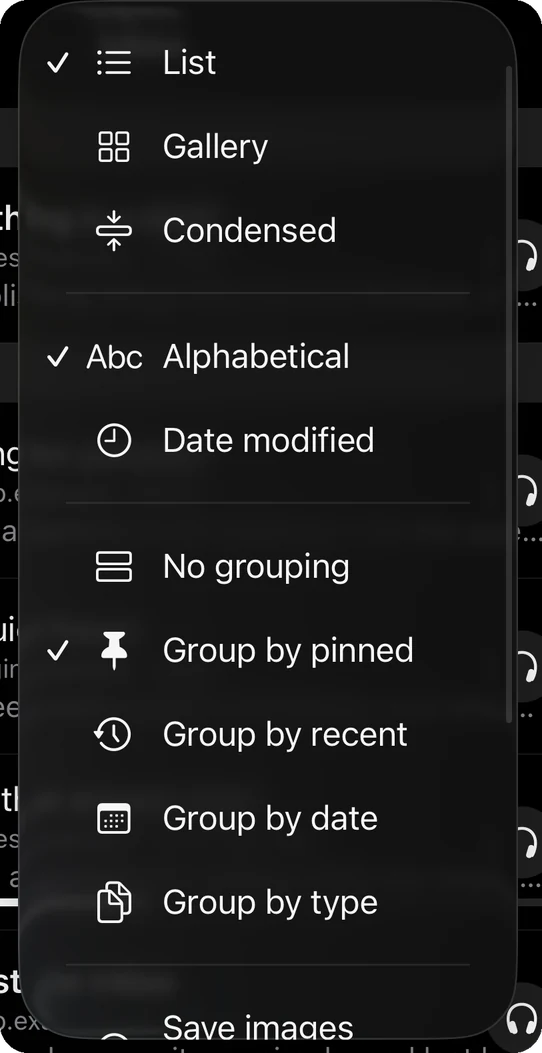
Two taps change how the whole library reads. Covers instead of filenames, grouped by what you pinned or by when you saved it — sorted the way you were already thinking about it.
Nothing here is a feed. The order is a setting, not an algorithm, and it stays where you put it.
Search that reads
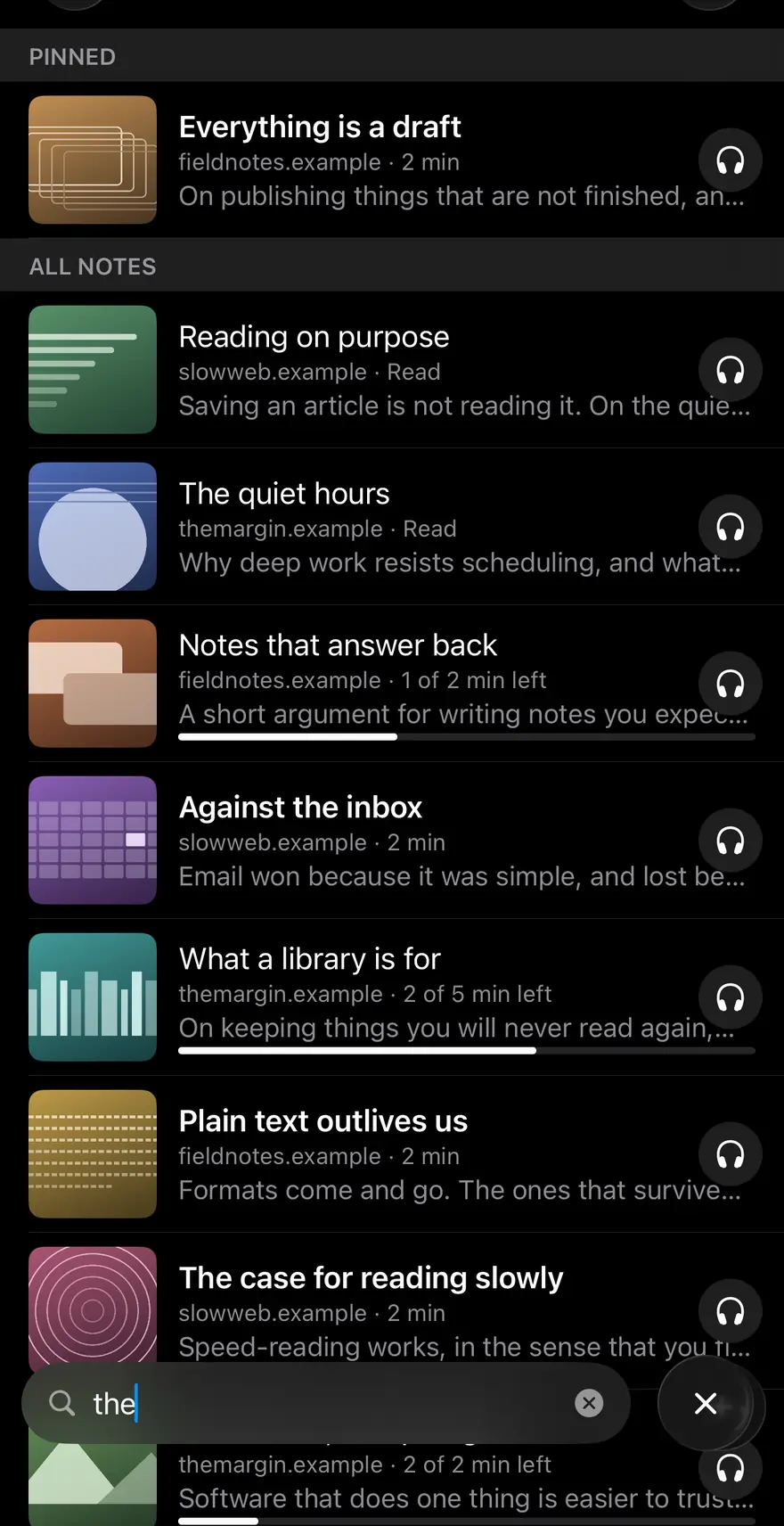
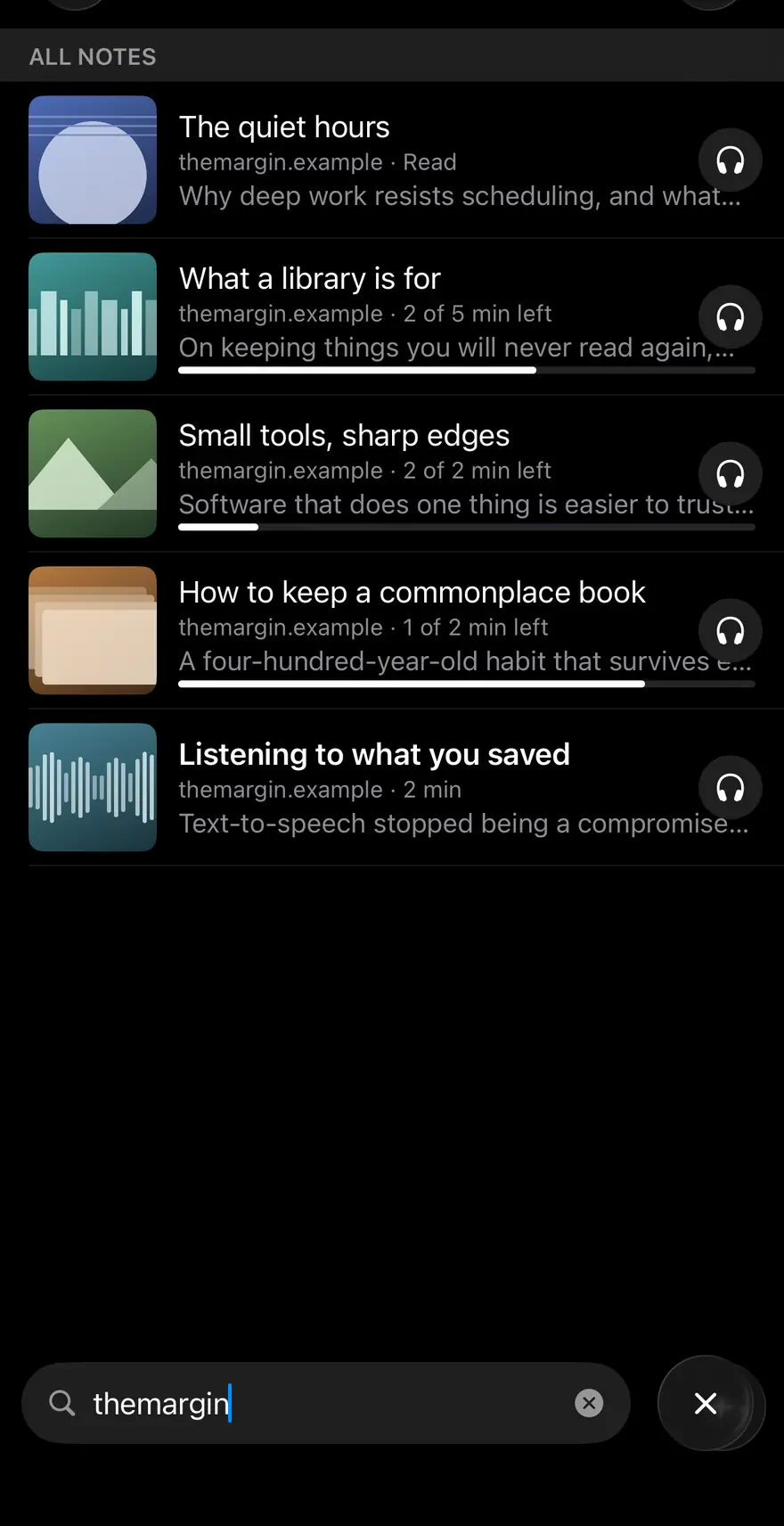
Not just filenames. Titles, the site it came from, and the opening line — so "that thing from The Margin" is a search you can actually run.
Sixteen items, then nine, then five — and every one of the five came from the same publication.
The hardest part of thinking is not the thinking itself, but holding still long enough for a thought to arrive.